Investigating Moisture
in Traditional Buildings
Start your building conservation journey with a practical, step-by-step introduction to damp pathology. Learn how traditional properties function, how to recognize moisture pathways, and how to confidently conduct baseline inspections using the standard JPS 2022 framework.
ICOMOS • IHBC • SPAB • Historic England Standard Foundations
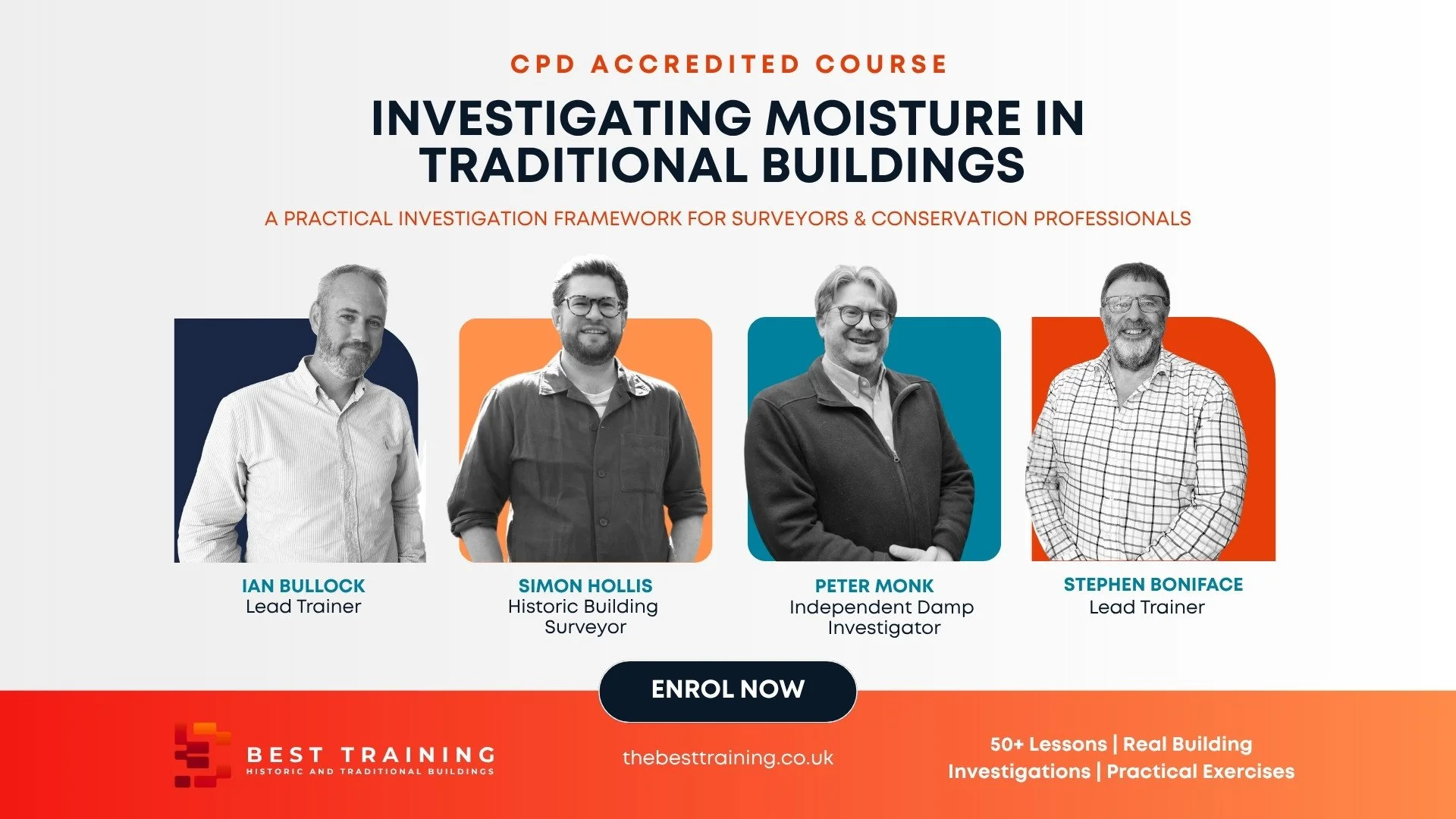
Featuring Simon Hollis & Peter Monk
50 Fundamental Lessons & Resource Toolkits
13 Hours of Practical Video, Interactive Tasks, & Quizzes
Step-by-Step Inspection Frameworks for Beginners
7 Practical Exercises & JPS Report Writing Guides
Inside Module 2
The Module 2 Curriculum
A comprehensive diagnostic roadmap taking you from non-invasive property profiling to advanced invasive moisture forensics and JPS 2022 compliant reporting.
Lessons & Resources
Core Learning Stages
On-Site Investigations
Expert Toolkits
Building Pathology & Moisture Dynamics
Establish the core foundations of building pathology, career journey milestones, legacy damp issues, and the critical minimum intervention philosophy.
- Investigating Damp — Course Overview
- Meet the Expert — Building Pathology & Career Journey with Simon Hollis
- Building Pathology & Moisture Dynamics
- Legacy Damp & the "Minimum Intervention" Approach
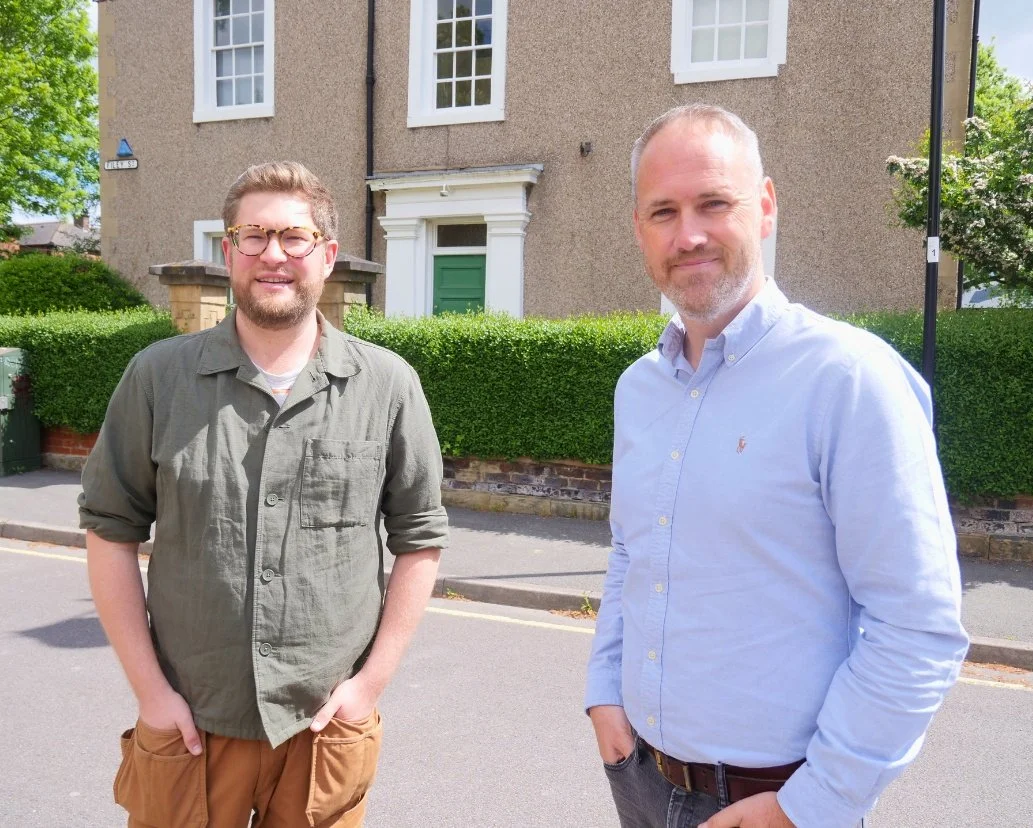
- On-Site Briefing & Property Profile (Filey Street)
External Inspections & Defect Mapping
Master the external diagnostic workflow: mapping wall defects, assessing render systems, analysing penetrations, and inspecting chimneys.
- External Wall Inspections — Assessing Render
- External Wall Inspections — Defect Mapping & Drainage Systems
- External Wall Inspections — Wall Penetrations & Weathering
- High-Level Inspections — Chimney Stacks, Flashings & Abutments
- Investigating Altered Chimneys — Listed Buildings & Internal Flue Failure
- Timber Window Inspections — Original Sashes, Decay & Timber Splicing
The Historic Building Inspection Process
Establish your core inspection methodology, assemble the surveyor's toolkit, manage expectations, and isolate cellar structural defects safely.
- The Historic Building Inspection Process
- What's in the Box? The Surveyor's Toolkit
- The Core Limitations — Managing Expectations
- Moving from Suspicion to Investigation
- Cellar Inspections & Below-Ground Defects
- Structural Alterations & Active Timber Pests
- Lesson Overview — Applying Best Practice During Residential Building Inspections
Invasive Forensics & JPS 2022 Criteria
Step into direct invasive investigations under the JPS 2022 framework, assessing verge overhangs, sub-floor voids, and deep structural defects.
- The Initial Consultation — Investigating Ben's Property
- Applying the JPS 2022 Framework to Damp Investigation
- Exterior Building Pathology & Damp Investigations
- Verge Overhangs & Water Shedding
- Testing Airflow — Visual Confirmation of Sub-Floor Ventilation
- Direct Boroscope Inspection of Sub-Floor Joists
Damp Diagnostics & Technical Probing
Bust the beeping meter myth, master thermal imaging, and leverage sub-floor timber hammer probes to analyse slate DPC paths.
- Hidden Water Sources & High-Traffic Damp
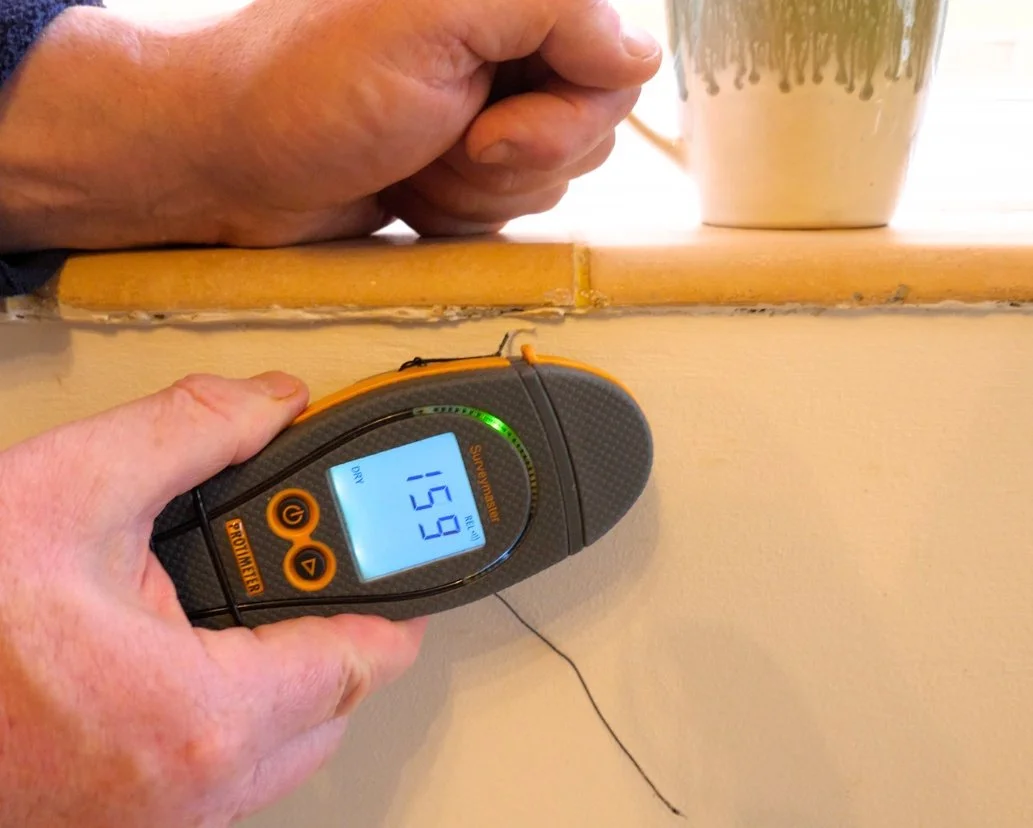
- The Beeping Meter Myth
- Salts, Surface Moisture & Skirting Board Analysis
- Using a Thermal Imaging Camera Effectively
- Assessing Sub-Floor Timber Moisture with Hammer Probes
- Forensic Indicators — The Rust Halo
- Locating the Slate DPC & Identifying Joist Saturation
Professional Judgement & Moisture Reports
Transform forensic findings into JPS 2022 compliant moisture reports, trace high-level roofscape moisture paths, and navigate high ground levels.
- Understanding Before Intervening — Practical Damp Surveying
- The Roadmap to Resolution — Navigating Uncertainty
- Case Study Conclusion — Presenting the Results to Ben
- Using Roofscapes & High-Level Inspections to Trace Moisture Pathways
- Managing High Ground Levels — Two Practical Case Studies
- Professional Report Writing for Moisture & Timber Investigations
See the Course in Practice
External inspections form the foundation of effective building pathology. Through real-world case studies and guided site investigations, you'll learn how to identify defects, assess risk, inspect historic fabric and develop a structured diagnostic approach before invasive investigation becomes necessary.