

The Reality of Surveying Thatched Properties
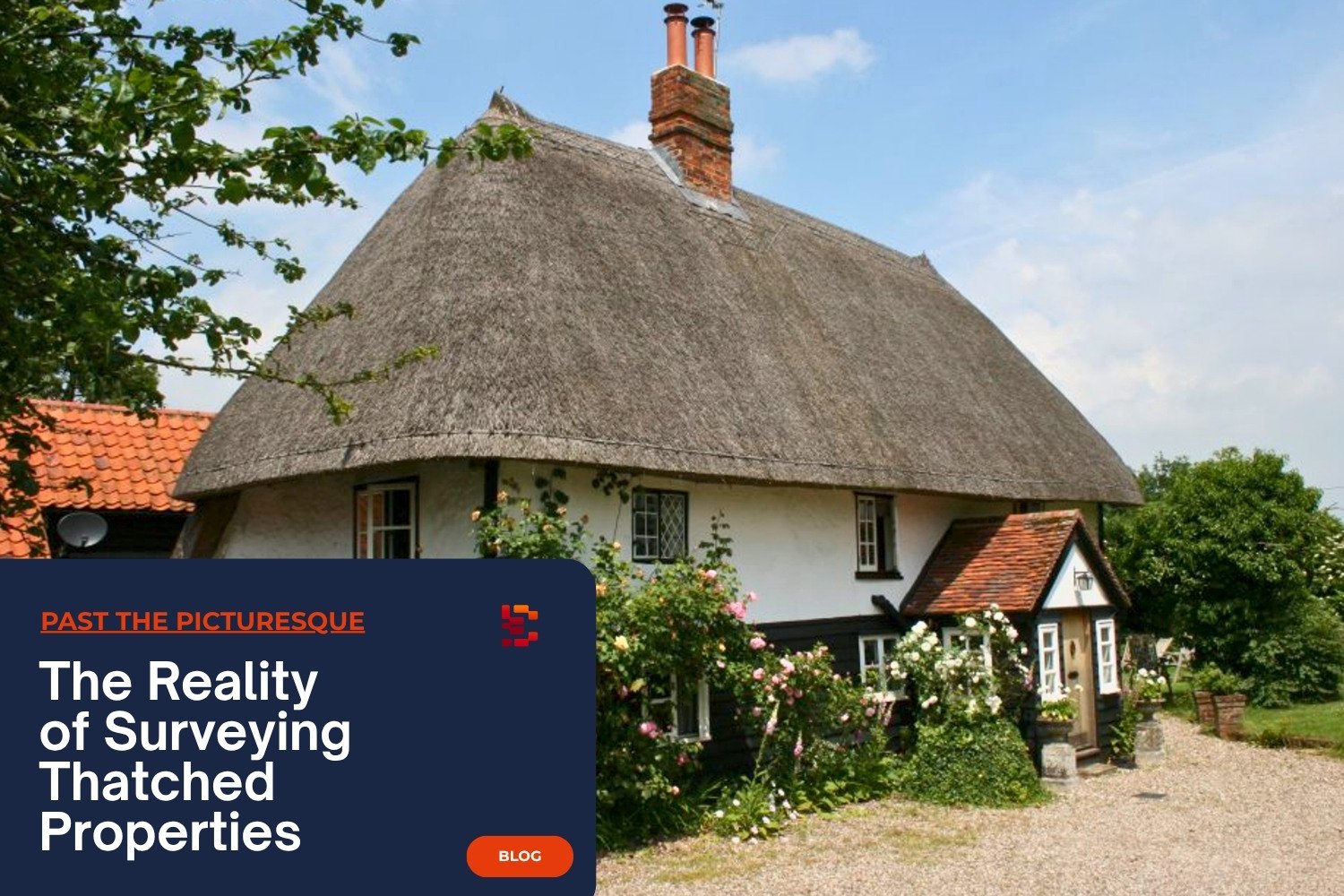
When I first became interested in building conservation back in the 1980s, it was entirely sparked by my fascination with thatched buildings. By the early 1990s, I found myself deeply involved in the world of thatch and thatching.
At the time, the industry was at a crossroads, filled with conflicting views on its future. While new estates were actively being developed with thatched properties , a fierce debate raged over whether to abandon traditional long straw in favor of water reed due to its perceived longevity.
This debate eventually triggered intensive research sponsored by English Heritage. The guidance they issued successfully protected all three core thatching traditions through the 1990s. Today, however, thatch is once again facing significant modern threats. To understand where we are going, we must first look back at how centuries of history shaped the roofs over our heads.
From Local Vegetation to Regional Traditions
Historically, "thatch" simply referred to using any locally available vegetation as a roof covering —in some parts of the UK, this even included materials like heather. During the medieval period, unless a building was highly prestigious, it was constructed strictly from materials grown nearby. Because vast swathes of Britain were covered in arable crops for food production, most historic roofs were thatched using rye, barley, or wheat straw. Over the centuries, wheat straw became the most predominant material.
Because historic threshing methods inevitably damaged the crop stems, a specific method called long straw thatching was born. Conversely, water reed was harvested in bundles and remained undamaged, requiring very little site preparation. True water reed was strictly confined to areas with massive, managed reed beds like the Norfolk Broads or the Somerset Levels. Unless a wealthy landowner could afford the high cost of transporting it inland, water reed was rarely seen away from its source.
The Industrial Revolution changed the fabric of thatch entirely. The introduction of steam-powered threshing machines meant cereal crops could finally be harvested undamaged, just like water reed. This allowed for the development of combed wheat reed—a straw thatch applied using reed techniques—which exploded in popularity across the Midlands and the Southwest.
The Ultimate Hidden Prize: Smoke-Blackened Thatch
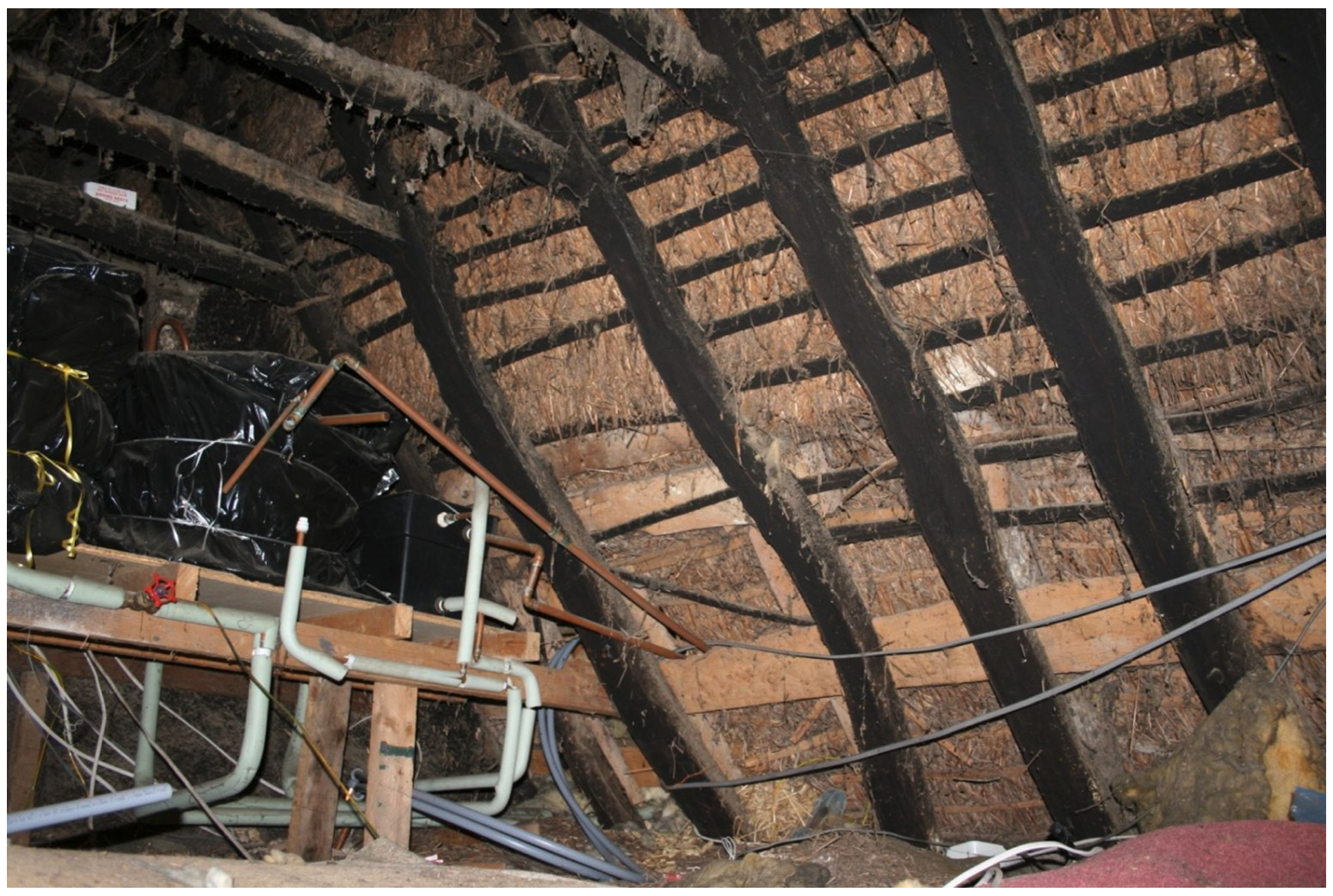
One of the most extraordinary aspects of surveying an ancient thatched property lies deep within its layers. Traditional straw and combed wheat reed thatching rarely requires stripping a roof back to the timber frame; instead, thatchers simply spar new material onto a sound base coat. This means centuries of history can be preserved in a deep, "poured over" accumulation of historic layers.
In medieval times, many homes lacked chimneys, relying instead on a central hearth fire where smoke simply rose to find a hole in the roof. While smoke-blackened timbers are common in many historic buildings , thatched properties offer something incredibly rare: smoke-blackened battens and base-coat thatch that have sat undisturbed for hundreds of years.
Sadly, as many roofs were converted to modern water reed over the decades—a process that typically requires stripping the roof entirely back to the bare rafters —countless historic base coats were destroyed. Today, it is estimated that only 30 to 50 buildings with true smoke-blackened thatch remain, mostly clustered in the South and Southwest. Discovering this fabric during an inspection is a monumental find that almost always warrants an uplift in the building’s official listing grade.
The Modern Decline and the Battle for Conservation
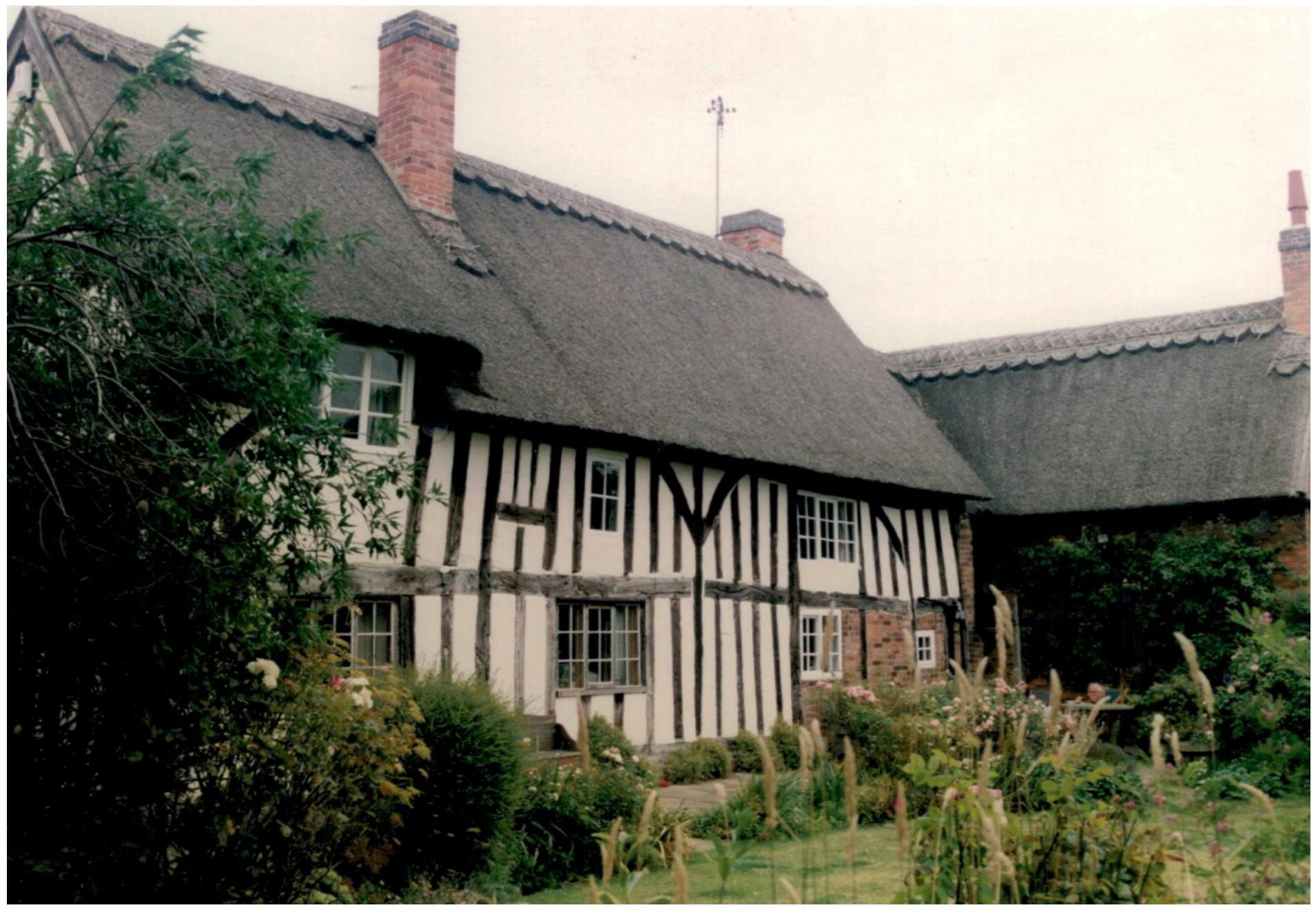
Despite its resilience, thatch suffered a catastrophic decline in the 20th century. While it enjoyed a brief revival during the Arts and Crafts movement , the expansion of the railways allowed cheap slate to be transported nationwide. However, the most devastating blow was delivered by the World Wars. The First World War saw a tragic loss of skilled thatchers, causing a massive decline during the interwar years, which was further exacerbated by labor shortages in World War II.
When the post-war government attempted to revive the craft with a formal training scheme, they made a critical mistake: they completely omitted long straw thatching because it was more difficult to teach and perceived to have a shorter lifespan than reed. As a result, generations of new thatchers were trained exclusively in water reed and combed wheat reed. The long straw tradition was nearly wiped out, surviving primarily through independent craftsmen in East Anglia. To see the impact of this shift, one only needs to look at Dorset: fifty years ago, it was exclusively a long straw county, but today, you will find virtually no long straw there at all.
This artificial shift caused a massive supply issue. Domestic water reed production couldn't keep up with demand, a problem worsened when conservation bodies like the RSPB resisted re-opening old reed beds to protect nesting birds. By the 1970s and 80s, the industry became heavily reliant on importing water reed from Central and Eastern Europe.
What This Means for Conservation Today
For surveyors and property owners dealing with listed thatched buildings today, understanding this history isn't just an academic exercise—it is legally binding under Historic England guidance.
The core philosophy of conservation is to retain regional variations in materials and styles. In practice, this means:
Enforcing Local Tradition: If a historic long straw property was incorrectly re-thatched in water reed in recent decades, local authorities will usually require a complete reversion to long straw when it comes time to re-thatch again. This has led to intense planning appeals and court cases.
Aesthetic Homogenisation:
Features like "block cut" ridges, which naturally belong to water reed construction, have become an idealized aesthetic trend. However, they are frequently slapped onto straw roofs where a flush ridge is the historically accurate local style.
Living under thatch today comes with modern anxieties—from high-profile roof fires making headlines to the unpredictable impacts of climate change on crop yield, material performance, and global supply chains. Coupled with a dwindling number of young people entering the trade, the future of thatch remains complex.
But by understanding how we arrived at this point, we can better appreciate the immense historical value of these roofs, look past the mere "chocolate box" charm, and properly advocate for the preservation of our true regional building traditions.